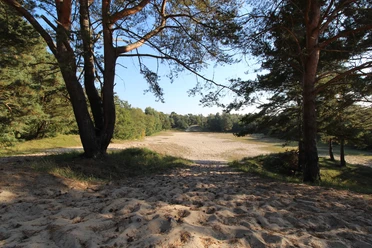
natures treasure Besenhorster Sandberge


This scenic area on the outskirts of Geesthacht was formed from sand deposits blown into dunes during the Ice Age. Even today, the dunes are up to 20 metres high and covered with oak, pine and birch trees. In the immediate vicinity are the Elbe sand meadows, a sandy dry grassland with rare plant species. While walking, you can also see the remains of the Düneberg powder factory, which was located there until the end of the Second World War. Nature has now reclaimed this area.
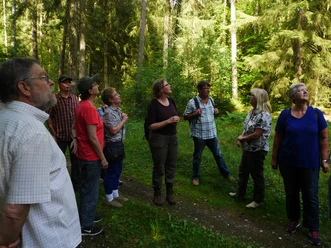
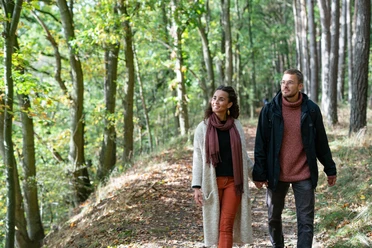
There is a signposted network of paths in the nature reserve. Circular hiking trails are available. For hikers and walkers, we recommend either the hiking car park at the edge of Geesthacht (Am Schleusenkanal – behind the B404 bridge towards Altengamme) or starting at Heuweg 65 in Geesthacht. Parking spaces are available at Heuweg. A small path (easy to miss) leads between two residential buildings to an underpass on the other side of the B 404; from here, the paths in the nature reserve are signposted.
Westlich von Geesthachts liegen in der Nähe der Elbschleuse die Besenhorster Sandberge mit bis zu 20 Meter hohen Dünen. Die zum Teil offene und ansonsten locker bewaldete Dünenlandschaft geht im Süden in die offene Landschaft der Elbsandwiesen über. Im westlichen Teil des Gebietes stößt der Wanderer auf zerstörte Bunkeranlagen der Düneberger Pulverfabrik, einer Munitionsfabrik, die nach dem 2. Weltkrieg demontiert wurden.
Abwechslungsreiche Wald- und Wiesenlandschaft
Neben dem schnellen Wechsel von lichtem Wald aus Eichen, Kiefern und Birken
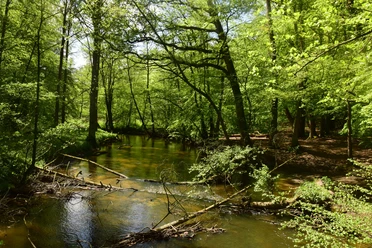
sowie den offenen Sandtrockenrasen sind die „Flutmulden“ eine Besonderheit.Hier steigt bei Elbhochwasser das „Qualmwasser“ nach oben und sorgt für nasse Senken in der sonst eher trockenen Landschaft. Spektakulär schließlich sind die bis zu 20 Meter mächtigen Sanddünen mit ihren teilweisen Abbrüchen im Zentrum und Ostteil.
The small-scale alternation of dry and wet locations provides a habitat for special animal and plant communities. Plants such as thrift, stonecrop and St. John's wort grow on the dry, chalk-rich sandy grasslands. In early spring, the meadow gold star, which is highly endangered in Schleswig-Holstein, blooms here. The rare burning bush grows in the damp hollows. And silver grass, blue-green shimmering grass and the thistle-like, blue-flowering field man's straw thrive on the dunes.
Insects such as the delicate grasshopper, feather dragonfly, ant lion and sand beetle can be found here. In addition, there are bird species such as the nightingale, lesser spotted woodpecker and green woodpecker. Numerous bird species also use the meadows as winter visitors.
Deposited sands from the Ice Age
The dune landscape was formed from sandy deposits left behind by meltwater flowing off during the Ice Age. These were blown into dunes in the Elbe glacial valley. The originally much larger inland dune area shrank due to development. In addition, the construction of the Geesthacht lock in 1955 deprived it of the dynamics of a river valley.
Best on foot
If you cross under the B404 (Lüneburger Straße) near the lock in Geesthacht ‘Am Schleusenkanal’/‘Horster Damm’ in the direction of Hamburg, after a few hundred metres you will pass industrial facilities on the right and reach the access road to the Besenhorster Sandbergen. There is parking available here.
From the north, you can reach the area via Escheburg-Voßmoor. There is also an access point on the B404 on the eastern boundary, marked by an information board. The signposted hiking trails are only suitable for cycling to a limited extent due to the sandy ground and can be walked as circular routes of varying lengths.
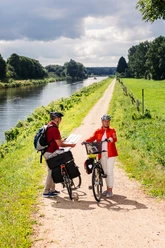
Cycling tours along the way
Technical tour around Geesthacht (approx. 30 km): Geesthacht – Voßmoor – Worth – Grünhof – Geesthacht.
There is a signposted network of paths in the nature reserve. Circular hiking trails are available. For hikers and walkers, we recommend either the hiking car park at the edge of Geesthacht (Am Schleusenkanal – behind the B404 bridge towards Altengamme) or starting at Heuweg 65 in Geesthacht. Parking spaces are available at Heuweg. A small path (easy to miss) leads between two residential buildings to an underpass on the other side of the B 404; from here, the paths in the nature reserve are signposted.
Westlich von Geesthachts liegen in der Nähe der Elbschleuse die Besenhorster Sandberge mit bis zu 20 Meter hohen Dünen. Die zum Teil offene und ansonsten locker bewaldete Dünenlandschaft geht im Süden in die offene Landschaft der Elbsandwiesen über. Im westlichen Teil des Gebietes stößt der Wanderer auf zerstörte Bunkeranlagen der Düneberger Pulverfabrik, einer Munitionsfabrik, die nach dem 2. Weltkrieg demontiert wurden.
Abwechslungsreiche Wald- und Wiesenlandschaft
Neben dem schnellen Wechsel von lichtem Wald aus Eichen, Kiefern und Birken
sowie den offenen Sandtrockenrasen sind die „Flutmulden“ eine Besonderheit.Hier steigt bei Elbhochwasser das „Qualmwasser“ nach oben und sorgt für nasse Senken in der sonst eher trockenen Landschaft. Spektakulär schließlich sind die bis zu 20 Meter mächtigen Sanddünen mit ihren teilweisen Abbrüchen im Zentrum und Ostteil.
The small-scale alternation of dry and wet locations provides a habitat for special animal and plant communities. Plants such as thrift, stonecrop and St. John's wort grow on the dry, chalk-rich sandy grasslands. In early spring, the meadow gold star, which is highly endangered in Schleswig-Holstein, blooms here. The rare burning bush grows in the damp hollows. And silver grass, blue-green shimmering grass and the thistle-like, blue-flowering field man's straw thrive on the dunes.
Insects such as the delicate grasshopper, feather dragonfly, ant lion and sand beetle can be found here. In addition, there are bird species such as the nightingale, lesser spotted woodpecker and green woodpecker. Numerous bird species also use the meadows as winter visitors.
Deposited sands from the Ice Age
The dune landscape was formed from sandy deposits left behind by meltwater flowing off during the Ice Age. These were blown into dunes in the Elbe glacial valley. The originally much larger inland dune area shrank due to development. In addition, the construction of the Geesthacht lock in 1955 deprived it of the dynamics of a river valley.
Best on foot
If you cross under the B404 (Lüneburger Straße) near the lock in Geesthacht ‘Am Schleusenkanal’/‘Horster Damm’ in the direction of Hamburg, after a few hundred metres you will pass industrial facilities on the right and reach the access road to the Besenhorster Sandbergen. There is parking available here.
From the north, you can reach the area via Escheburg-Voßmoor. There is also an access point on the B404 on the eastern boundary, marked by an information board. The signposted hiking trails are only suitable for cycling to a limited extent due to the sandy ground and can be walked as circular routes of varying lengths.
Cycling tours along the way
Technical tour around Geesthacht (approx. 30 km): Geesthacht – Voßmoor – Worth – Grünhof – Geesthacht.
Good to know
Author
Organization
Herzogtum Lauenburg Marketing und Service GmbH