natures treasure Lake Mechower See


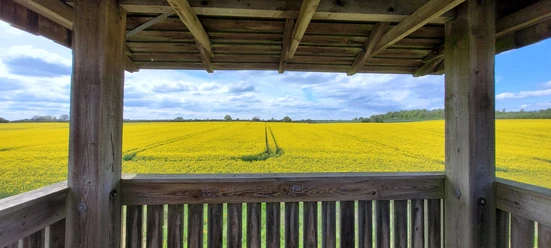
The Mechower See, a glacial channel lake, is a paradise for waterfowl. Numerous species of ducks and geese inhabit the area. From the observation tower on the northwest shore, visitors may even spot a white-tailed eagle. Along the way, the beautiful hedgerow landscape offers stunning views, especially during the spring bloom of blackthorn. The pollarded black poplars along the paths provide both a rustic backdrop and a habitat for woodland creatures. A walk around the Mechower See is also a journey through history, as the lake lies in a former border area.
Highlights & Facilities:
Circular Trail: marked around the lake
Observation Tower: northwest shore (accessible from Mechow)
Observation Hide: southernmost point at Wietingsbek (barrier-free)
Grenzhus (Border House): in Schlagsdorf
Hiking Parking: in Wietingsbek
The Mechower See is located about 3 km northeast of Ratzeburg and the Ratzeburg See, right on the state border with Mecklenburg-Vorpommern. Today, it is where two federal states and two large protected areas meet; in the past, it was a heavily guarded state border. The glacial channel lake, with its extensive wet grasslands, is a haven for waterfowl.
A Sanctuary for Birds and Birdwatchers
As part of a lake chain, Mechower See and its wet grasslands are important stepping stones for migrating amphibians such as the fire-bellied toad and great crested newt. The natural reed belts provide suitable breeding grounds for the reed warbler. Excellent views of waterfowl can be enjoyed from the observation tower on the northwest shore, accessible via the Schlagsdorfer Weg near the Mechow fire station. From this elevated vantage point, additional information panels help visitors discover more.
Thousands of pochards, for example, use the quiet Mechower See to molt. Large birds of prey, such as white-tailed eagles, red kites, and marsh harriers, regularly circle over the lake. For those who prefer ground-level observation, the observation hide, a wooden hut at the southernmost point near Wietingsbek, provides sheltered viewing and photography opportunities. This hide is barrier-free.
Formed Under Ice
During the last ice age, meltwater flowed beneath the glacier, carving a channel into the ground. When the glacier retreated, ice remnants remained, later melting to form the elongated lake. About 10 meters deep, Mechower See lies in a gently undulating moraine landscape.
Mechower See – Former Border Area
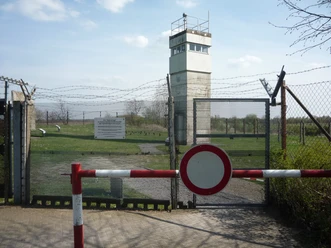
During the period of the Inner German border, the lake belonged to the GDR, with the Federal Republic beginning directly on the western shore. The border era allowed the lake to remain largely untouched. Today, both the lake and the western shore are protected as nature reserves.
Exploring Across the Border
The best way to explore Mechower See is from the public hiking parking lot in Wietingsbek at the southern end of the lake. An information board provides a good overview of the possibilities. A circular trail of approximately 7 km leads along the lake shore and across the former border strip to the bird observation tower.
Directly at the parking lot is also the border trail, a walking path leading to Schlagsdorf (GRENZHUS info center). Informational panels along the route tell stories of life at the border and escape attempts from that time. On a walk around the lake, visitors will notice a small island in the northern part of Mechower See. This is said to have once hosted the fortified dwelling of the robber knight Johann Ribe von Schlagsdorf, who in the 14th century attacked merchants traveling to Lübeck. Today, the island is home to cormorants.
Additional Information:
Circular trail around Mechower See, parking in Wietingsbek
Lake cycling tour (approx. 48 km): Ratzeburg – Schlagsdorf – Mustin – Dargow – Salem – Ratzeburg
Good to know
Directions & Parking facilities
- Radfahrer erreichen Mechow auf der Seenradtour mit Start und Ziel in Ratzeburg. Ein Parkplatz befindet sich an der L01 von Wietingsbek kommend auf der linken Seite.
Author
Organization
Herzogtum Lauenburg Marketing und Service GmbH